



LPG GAS BOTTLES 12.5KG
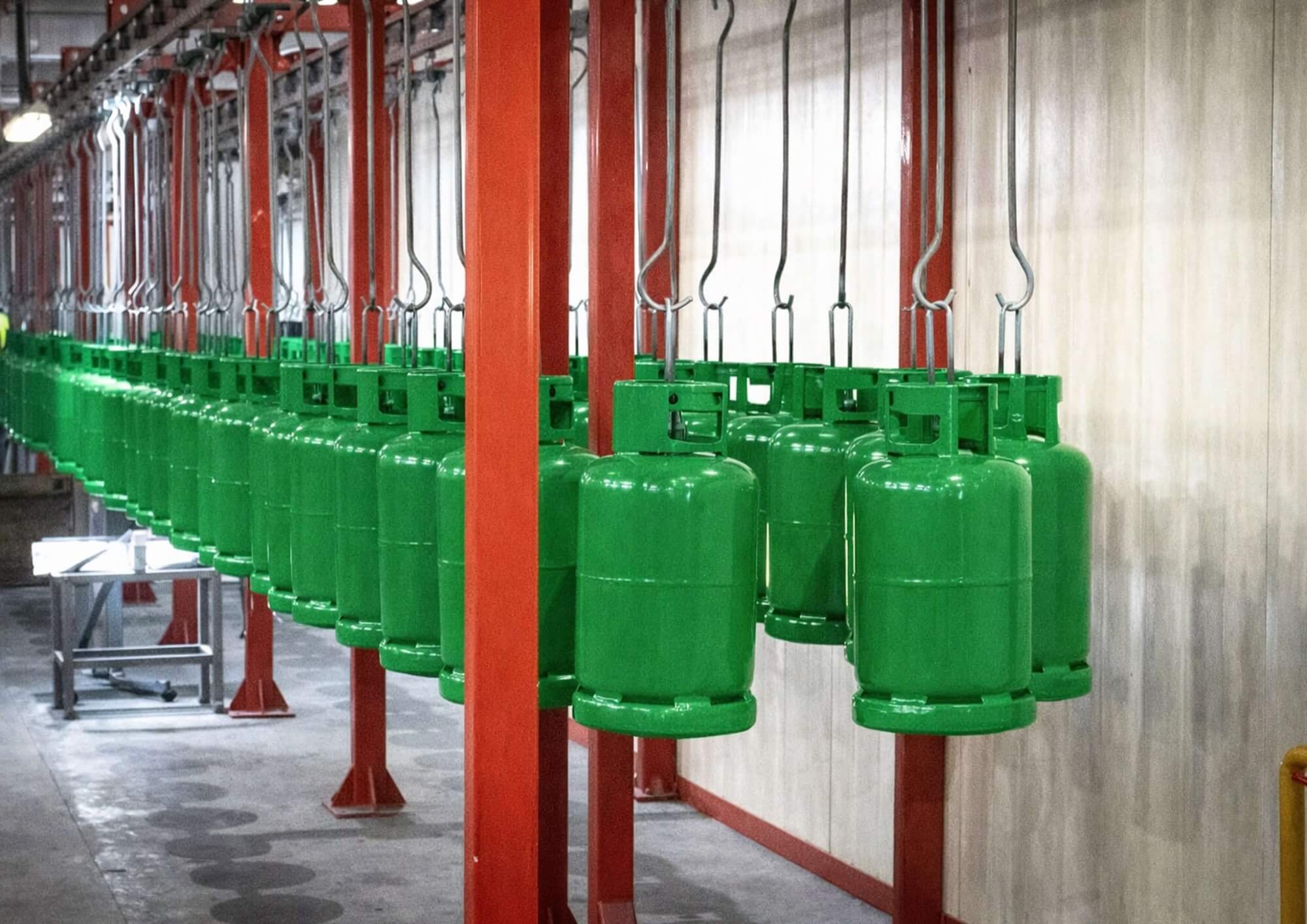
The manufacture of LPG cylinders involves several distinct stages, including cutting, forming, welding and painting.
Throughout the manufacturing process, the gas cylinders undergo numerous checks. These cover aspects such as welds, valve attachment, leak-tightness, tightening torque, and resistance to impact, drops, bending and various forms of handling. The aim is to eliminate any items with potential defects that could compromise their use or the safety of users.
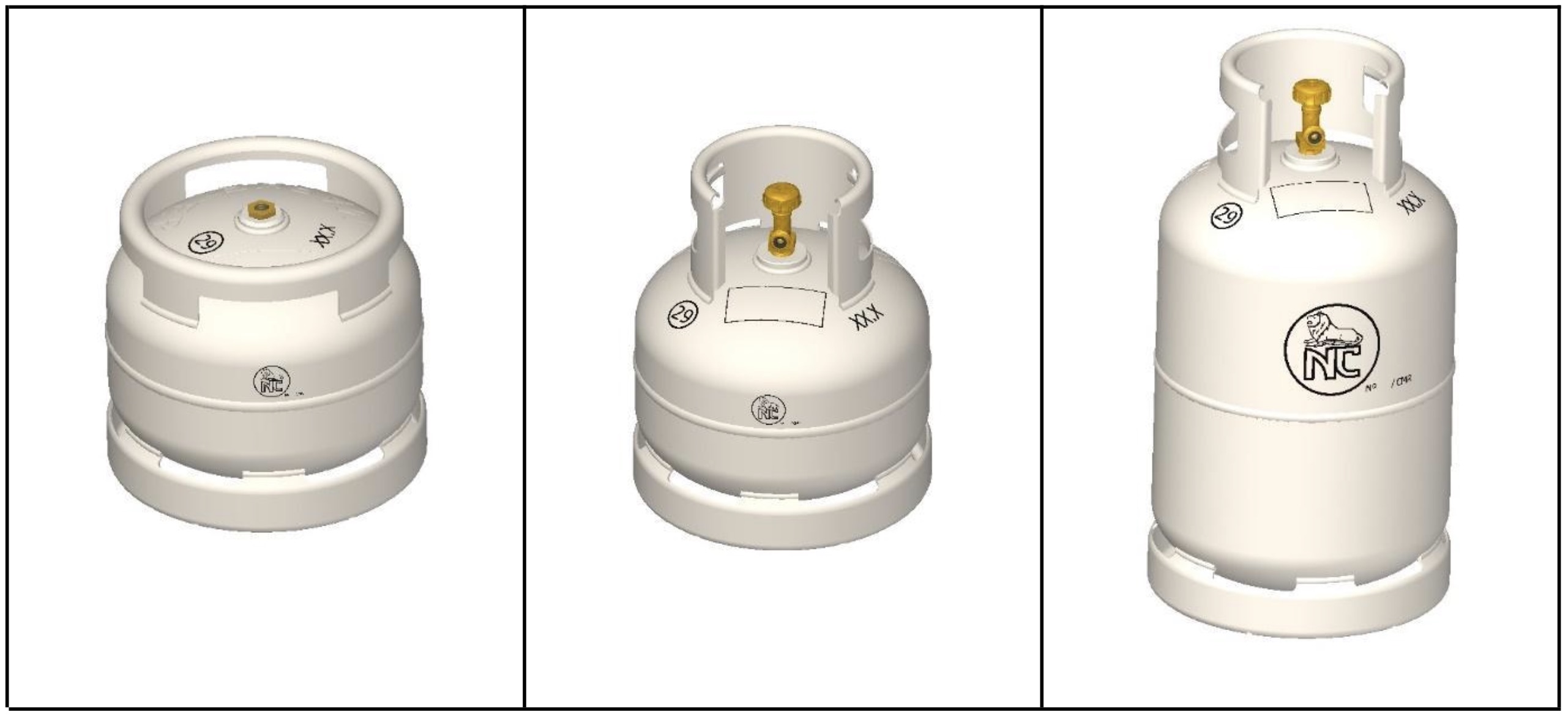
The products manufactured by PROGAZ are 6 kg and 12.5 kg cylinders. These are manufactured in accordance with the relevant regulatory requirements, alongside the specific expectations of each customer (graphic guidelines, etc.).
PRODUCT DETAILS
- Standard used: NC 02: 2018
- Supplementary standards:
- Body – JIS G3116 SG295
- Collar – SAE 1018 / EN 10083-1 C22E
- Rim and base – EN10025-2: S235JR
- Cylinder type: B6kg and B12.5kg
BOTTLE DESIGN
A transportable, refillable, two-piece welded steel cylinder for liquefied petroleum gas, heat-treated at a temperature between 890 °C and 920 °C.
BOTTLE FINISH
Sandblasted bottle, metallised with a layer of zinc and finished with electrostatic powder coating in an oven (colour to the customer’s specification).
TECHNICAL SPECIFICATIONS
- Type of gas: Butane
- Cylinder capacity: 6 and 12.5 kg
- Cylinder volume: 12.9 and 26.5 L
- Test pressure: 30 bar
- Minimum wall thickness of the cylinders: 2.02 mm
- Nominal thickness of steel sheet: 2.5 mm
- Outer diameter: 300 mm
- Total height of cylinder: 568 ± 8 mm (12.5 kg); 218 ± 5 mm (6 kg camping); 366 ± 8 mm (6 kg standard with valve)
MECHANICAL PROPERTIES OF THE BASE METAL
- Tensile strength: Rm ≥ 440 MPa
- Yield strength: Re ≥ 295 MPa
- Elongation: ≥ 26 %